First Daughter, Last Considered
The eldest daughter is not damaged. She is patterned. And understanding the difference is where everything begins to change.
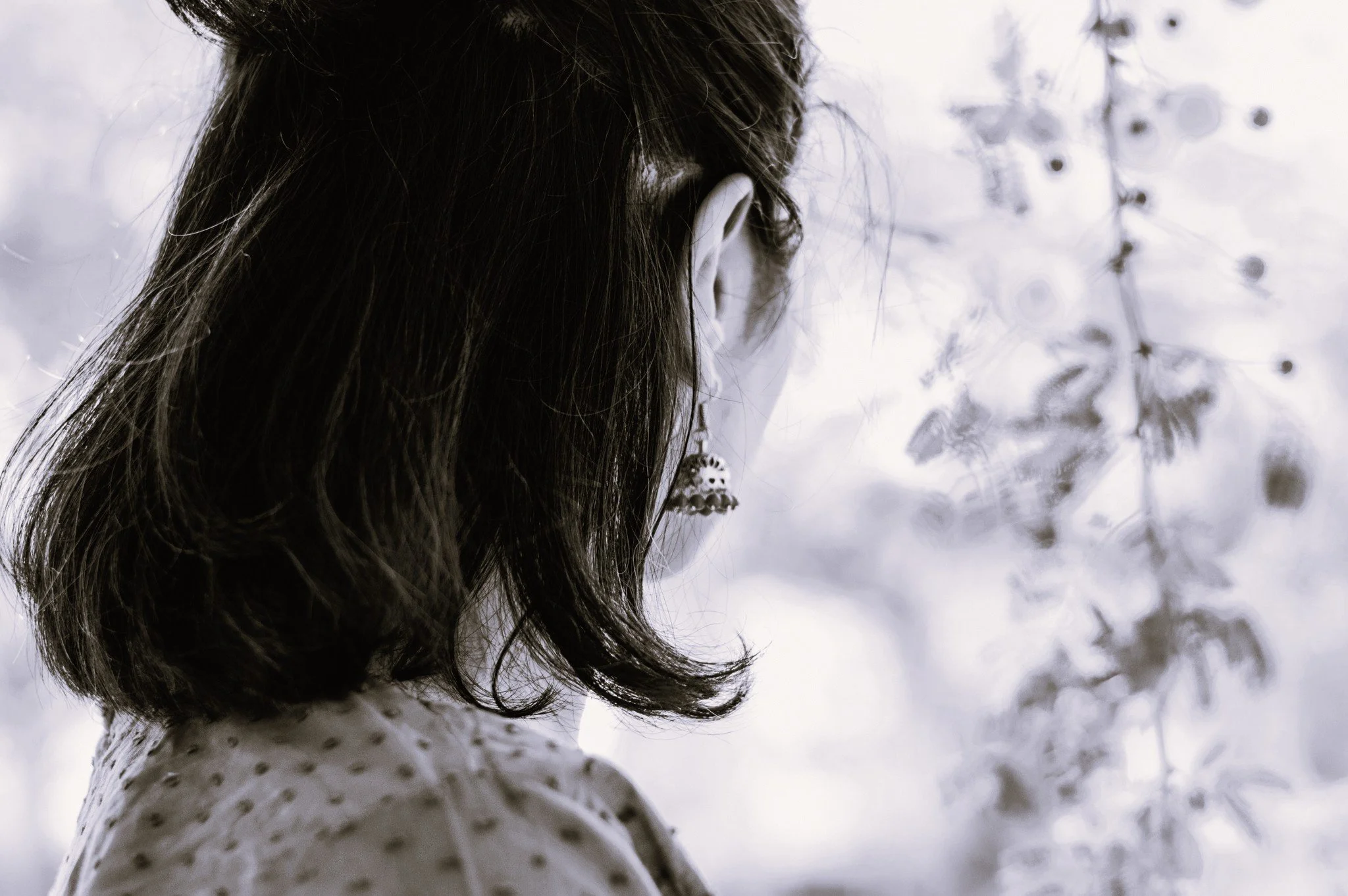
A female, South Asian, firstborn daughter - the perfect ingredients to turn a blessing into a curse.
I am the eldest daughter.
Many have written and documented the curse of being the eldest daughter. It is also addressed as the “Eldest Daughter Syndrome” (EDS). So what I’m writing is nothing new.
But what sets my writing apart is not only the acknowledgement of patterns, burdens, challenges, fears, and the roles, but also that the identity of the eldest daughter is not tied to any institution or family. It is beyond that. It is who we are deep inside that must emerge.
I do take pride in being the eldest daughter. However, to say that I have not regretted or resented being one will be false. Because, like many eldest daughters, I have had my own set of challenges and responsibilities that I still carry.
As the eldest daughter and sibling, there is no doubt that we take on roles without even remembering when, and at what point in time, was that role assigned to us. There is no memory as such. We are the mediators between the parents and the siblings; we are the communicators between our parents. We are also the nurturers for our younger siblings, listening, guiding, and being there for them through every thick and thin. We are and have to be good role models for our siblings, cousins, and extended family. What is tragic is that we wear these roles so seamlessly that we don’t even notice when we switch from one role to another.
As parents age, we, being the highly responsible and empathetic ones, take on more responsibilities to help them and make things easier for them. Whether married or single, the support from the eldest daughter is enormous, incredible to say the least. And yet, we are hardly ever recognized. We carry the burden of family expectations and respectable status in society. The rules for the eldest daughter are rarely the rules for everyone. She watches siblings navigate life with a freedom she was never offered, not because the family changed, but because the eldest daughter had already paid the price for the family’s sense of order.
Nowhere among the responsibilities we carry are we ever asked: How are you? Or what do you, as a person, need? You are assumed to be capable. When you are assumed to be capable, your emotional needs become invisible. You are labelled as “panicky” or “too emotional”. The eldest daughter does not drown dramatically. She drowns quietly, gradually, searching for a lifeline with no one noticing she is even in the water. She herself doesn’t recognize that the life line she is searching for, the light she wants to see at the end of the tunnel, is within her. Her education, strength and capabilities all become the very reasons no one thinks to ask if she is ok. It is as if somehow, the eldest daughter was born with the default mode of being the “mature one”, the “emotional intelligent one,” and the “kind and caring one”.
She is everything to others, nothing for herself.
In the midst of all chaos, the eldest daughters become overachievers. Becoming overachievers opens another flood gate as we are targeted by siblings, cousins and others, lamenting how their parents expect them to be. In that same breath, we hardly celebrate the achievements of eldest daughters, for god forbid it would instill overconfidence in their own capabilities. As Elise Loehnen writes in On Our Best Behavior (2023), "my parents were not wrong to feel anxious that my success would go to my head, because then, in the eyes of the society, I would become intolerable, unlikable, alienated from the other girls. This teaching - be excellent, but be unseen, don’t reach for the credit or attention - followed me throughout my life."
And, yet, the eldest daughter still manages to become the “hyper independent” woman. The “hyper independent” woman that has been trained for goodness and “still controls her behaviour through a set of filters, even if it does not align with what we know ourselves to be.” (Elise Loehnen from Our Best Behavior). The “hyper independent” woman who does everything herself and yet still fears being seen or being too much. She becomes an alert system that never switches off, worrying about parents’ health while neglecting her own, ensuring she is present anytime her family needs her, while ignoring her own needs. She carries the weight of guilt and anxiety side by side - yet to the outside world, she is the ultimate “boss”. The “hyper independent” woman is intimidating, not good enough, and yet, she is the glue that is holding everyone together, but herself. She overworks, overthinks, and gets burned out with no medicine in her hand to heal herself.
And then I ask “should I, as an eldest daughter, still see it as a curse”?
The answer is no, but with caveats.
I do take pride in being the eldest daughter. I also admit that, unlike women of my culture, especially those born and raised in the Middle East, my path as an eldest daughter turned out to be different. It still doesn’t change the birth order and the circumstances around me. Over time, though, the accumulation of responsibilities, chaos, roles and feelings did set the trigger for a shakeable event.
My trigger did not come from a boardroom or family argument. It came in the form of a loss I was not allowed to grieve properly. I needed support. What arrived instead was a decision - practical, swift, family facing - and the expectation that I would carry out the decision and then carry on. No one asked how I was. No one thought to. I was the capable one. I was the one who could handle it. And in that moment, for the very first time, I understood that being capable had cost me the right to fall apart in front of the people who should have caught me.
In the aftermath of loss, what no one saw nor predicted, tha I saw the patterns clearly. I faced the question of who I am really if these roles and responsibilities never existed, and that question changed the entire course.
As an eldest daughter, I have made peace with the fact that my family will not be comfortable nor in agreement with many of my choices - that is fine. To grow out of the shell demands breaking comfort zones and saying a lot of goodbyes. You must choose yourself first, and if that means maintaining a distance from everyone for your well-being - we should accept it no matter how uncomfortable it is. It is extremely difficult to break the chains built from the long, outdated narratives that became the blocks in your path. However, it is not impossible to break them. Not all problems have a solution, not all problems have to be solved. Some are simply meant for time itself to resolve. We don’t have to carry the burdens such that they break us. We do what we can best and let it be.
We rest, we dream, we build - and for sure, at times, we will break. The patterns run deep. They were laid down before we had words for them. But the eldest daughter who begins to see the pattern - who names it, who questions it, and dares to choose differently - is not abandoning her family. She is finally, slowly, becoming someone who she truly is.